Beauty Advice
Matcha for Skin: What Those Antioxidants Actually Do
The RichRadiance Team
·
August 2026
·
5 min read
Matcha shows up in a lot of morning routines now, usually in a cup. The same leaf has quietly become a skincare ingredient too, and it is the reason our Saffron Matcha Bloom cream is the colour it is. So what does matcha really do for skin? Less than the internet promises, and more than you might expect.
Matcha is green tea grown and finished a particular way. With regular tea you steep the leaves and pour the rest down the sink. With matcha you use the whole leaf, stone-ground into powder, so nothing gets thrown away. That is why a small amount carries so much of what the plant makes, including the catechins matcha is known for. Ounce for ounce, it is one of the richest sources of them going.
Antioxidant is one of those words that gets stamped on everything and explained almost nowhere. Skin deals with a constant low hum of stress, from sun and pollution to the general wear of a day in the city. That stress kicks off unstable molecules called free radicals, and left alone they show up on the surface as dullness and early signs of tiredness. Antioxidants push back, settling those molecules down before the effect reaches your face. Matcha’s headline catechin, EGCG, is one of the most studied of them, which is why green tea has had such a long run in skincare.
Matcha brings caffeine along too. On skin, caffeine works on appearance rather than energy. It has a knack for making skin read as more awake, easing the look of puffiness and lending a fresher finish to areas that have seen a short night. The lift is cosmetic and it fades, but a fresher-looking morning is usually the whole ask.
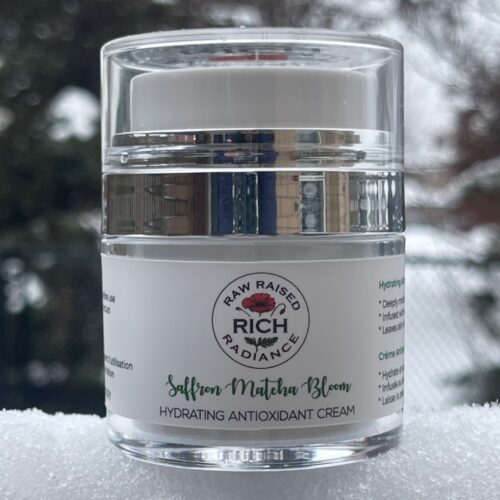
Matcha on its own is a steady, antioxidant-rich base. We reach for saffron alongside it because the two work in different registers. Saffron has been used for centuries for the warm, lit-from-within look it lends skin, which we dug into in Saffron for Skin. Matcha handles the antioxidant side and the fresh finish. Put together, they are the core of our Saffron Matcha Bloom cream, a small-batch moisturiser we make in Canada to hydrate, soften and bring out skin’s natural glow.
No elaborate ritual required. As a cream, matcha sits well as your daily moisturiser, morning or night, over clean skin. In the morning it plays nicely under sunscreen, since antioxidants and SPF back each other up. In the evening it is a slow, good-smelling way to wind down. With something this concentrated, a modest amount does the work.
Matcha built its name a cup at a time, on showing up daily. Skincare rewards the same habit. If you are curious how it wears, our face care is where to begin.
Matcha tends to be gentle, and in a considered formula it works for most skin types, sensitive included. Patch test on your inner arm first and give it a few days, as you would with anything new. Already using retinol or acids? Bring matcha in slowly so nothing competes.
Yes, and daily is rather the point. Antioxidants pay off through repetition, so morning or night, a pea-sized amount is plenty.
Same plant, many of the same compounds, different job. The cup works from the inside. On skin, it works where you smooth it on. Nothing stops you enjoying both.
Handmaking skincare in small batches in Canada, rooted in nature, resilience, and authenticity.
Good skin rarely comes from a complicated routine or the priciest products on the shelf. It comes from…
Saffron has been part of beauty rituals for roughly three thousand years. People steeped it in milk, stirred…